Is Social Media Mental Health Advice Actually Accurate?
“You watched a three-minute video, felt seen in a way you never had before, and thought: that is me. That is exactly me. That feeling is real and it matters. But the label the algorithm handed you? That deserves a much closer look.”
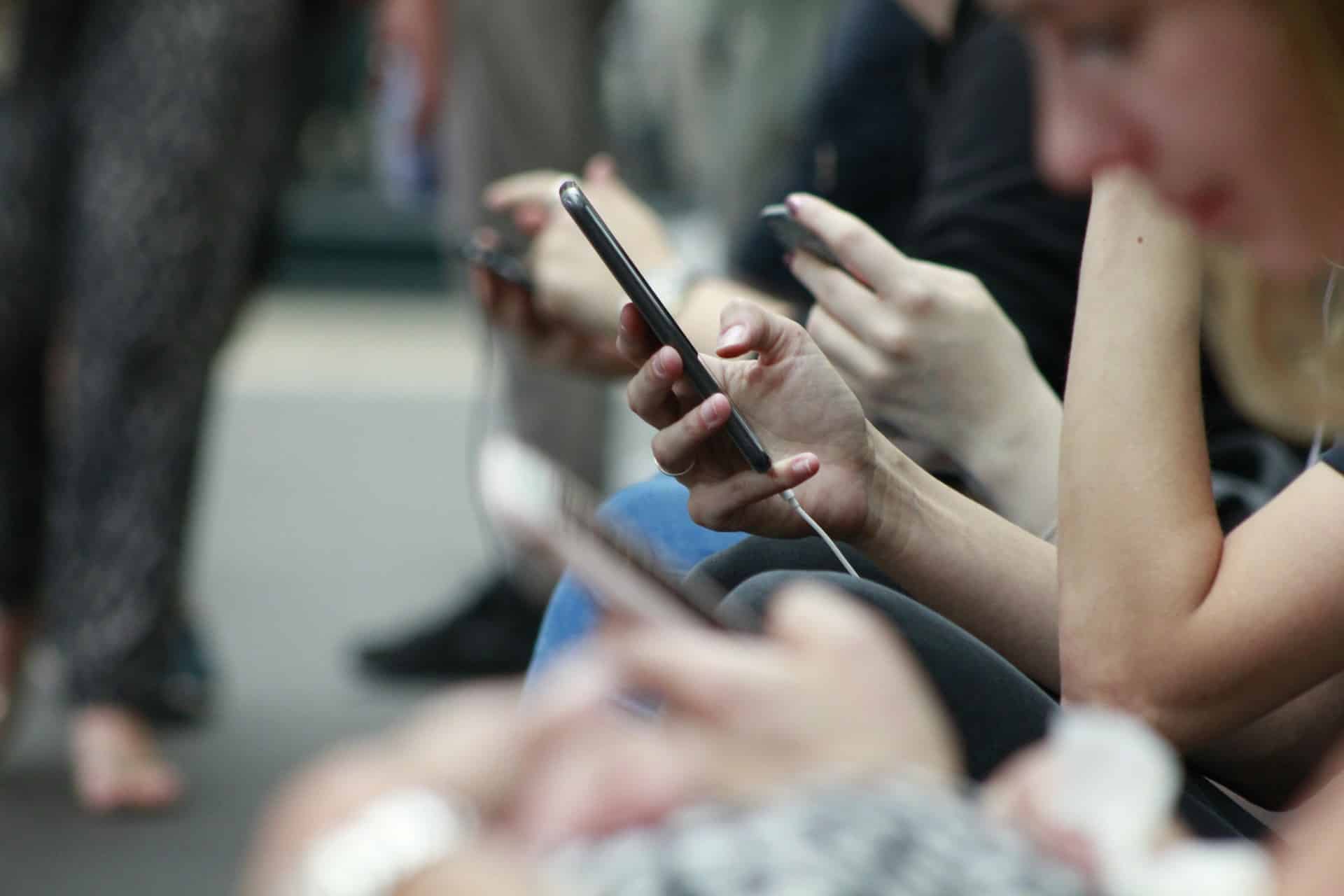
Scroll through TikTok or Instagram for ten minutes and you will likely encounter a video listing the “signs you have ADHD,” the “traits of undiagnosed autism,” or “how to know if your childhood was actually traumatic.” These videos often rack up millions of views — and for good reason. They are relatable, validating, and frequently address experiences that people have carried in silence for years without language for them.
The desire to understand yourself is not only healthy — it is deeply human. If you have spent years feeling different, overwhelmed, or misunderstood, stumbling onto a video that names your experience can feel like a lifeline. We want to honor that. That moment of recognition matters, and it is often the first spark that leads people toward the support they genuinely need.
But here is what the algorithm does not tell you: a landmark 2026 study found that up to 50% of viral mental health content on platforms like TikTok and Instagram contains outright misinformation, particularly around ADHD and autism. Social media mental health misinformation is not a fringe problem — it is a majority problem. And the real cost is not just a wrong label. It is the delay in finding the right support.
This article is not here to shame anyone for turning to social media when they needed answers. It is here to help you understand the meaningful difference between a relatable video and a clinical assessment — and to show you what getting real clarity can actually look like.
The Numbers Behind Social Media Mental Health Misinformation
The scale of the problem is striking, and it is worth sitting with for a moment before moving forward. Researchers and clinicians have been raising concerns about social media mental health misinformation for years, but the 2026 data has made the picture sharper and more urgent than ever.
📊 What researchers are finding about mental health content online
“TikTok leads social media platforms in mental health misinformation,” according to a March 2026 Euronews Health investigation reviewing hundreds of viral videos on ADHD, autism, anxiety, and trauma. The study found that the most widely shared content was also the least likely to be clinically accurate — because relatability, not accuracy, is what the algorithm rewards. Meanwhile, GWI’s 2026 Mental Health Report confirms that parents and young adults are now actively searching for ways to distinguish credible information from viral content — a sign that awareness of the problem is growing.
Why the Algorithm Is Not a Clinician
Social media platforms are not designed to help you get an accurate picture of your mental health. They are designed to keep you watching. The content that surfaces most often is the content that generates the strongest emotional response — and few things generate a stronger response than feeling suddenly, completely seen.
This is not an accident. The more a video makes you feel “that is exactly me,” the longer you stay on the platform, the more you share it, and the more the algorithm learns to serve you similar content. What results is an echo chamber of self-identification that reinforces a particular lens — whether or not that lens fits your actual experience accurately.
ADHD content is a clear example. The symptoms described in viral ADHD videos — difficulty focusing, forgetfulness, impulsivity, emotional sensitivity, feeling overwhelmed — are genuinely common human experiences, especially among people living with chronic stress, anxiety, depression, sleep deprivation, or unresolved trauma. These experiences overlap significantly with ADHD, but they do not confirm it. A clinical diagnosis of ADHD requires a comprehensive evaluation that considers developmental history, multiple settings, symptom severity, and rules out other contributing factors. A checklist in a caption cannot do that work.
The Real Risks of Social Media Mental Health Misinformation
We want to name this clearly and kindly, because the consequences of social media mental health misinformation are not abstract. They show up in real people’s lives in real ways — sometimes in ways that are hard to trace back to a video watched months ago.
-
Pursuing the wrong treatment path
When someone self-diagnoses based on social media content and seeks out treatment for that specific condition, they may spend months or years pursuing an approach that does not address what is actually going on. Misidentified ADHD, for instance, can lead someone to skip over anxiety, trauma, or sleep disorders that are the actual drivers of their symptoms.
-
Delaying a diagnosis that would genuinely help
The flip side is equally real. Someone who truly does have ADHD, autism, PTSD, or another condition may spend years consuming social media content about it without ever receiving the clinical evaluation that would open doors to real, targeted support. Content consumption can become a substitute for care rather than a bridge toward it.
-
Building an identity around a label that may not fit
Identity is powerful, and a diagnosis — real or self-assigned — can shape how we see ourselves, explain our behavior to others, and approach our relationships. When that label is inaccurate, it can quietly limit growth, create unnecessary stigma, and make it harder to understand what is actually happening inside us.
-
Increased anxiety from overexposure to mental health content
Research from the National Institute of Mental Health confirms that excessive consumption of mental health content online can actually increase anxiety and health-related worry, not reduce it. The more videos you watch about symptoms, the more symptoms you tend to notice — a phenomenon sometimes called “symptom suggestion.”
-
Confusing trauma responses with neurodivergence — or vice versa
This is one of the most common and consequential overlaps in social media mental health content. Many symptoms associated with ADHD and autism — sensory sensitivity, difficulty with transitions, emotional dysregulation, social fatigue — also appear in people with complex trauma histories. Without a thorough assessment, it is genuinely difficult to untangle these threads. A clinician can. A comment section cannot. Read more about how unaddressed trauma shapes our daily experience on our blog.
What a Real Clinical Assessment Actually Looks Like
One of the reasons social media content fills such a large void is that many people have never experienced what a thorough, thoughtful clinical assessment actually feels like. It can sound intimidating or overly formal. In reality, it is something much more personal — and much more useful — than a checklist.
A real assessment begins with your whole story. A licensed clinician does not simply ask whether you experience certain symptoms. They ask about when those experiences began, how they show up across different areas of your life, what your early years looked like, how your relationships have been affected, and what else might be contributing. Context is everything in mental health, and a video has no access to yours.
It distinguishes between overlapping conditions. Anxiety can look like ADHD. Trauma can look like autism. Depression can look like both. A comprehensive evaluation separates these threads carefully, because the right understanding leads to the right support. The American Psychiatric Association emphasizes that accurate diagnosis is the foundation of effective treatment — and that self-diagnosis, while understandable, frequently misses the full picture.
It creates a path forward that is actually yours. The goal of a clinical assessment is not to hand you a label. It is to help you understand yourself more accurately so that the support you receive fits who you actually are. That might mean therapy, lifestyle changes, medication, skills-based work, or some combination. It is a personalized map, not a one-size-fits-all answer.
At A Beautiful Soul, we approach assessment holistically. We consider the body and the nervous system alongside the mind, recognizing that many of the experiences people encounter in viral mental health content are deeply connected to isolation, chronic stress, and unprocessed emotion — not necessarily a diagnosable condition. Sometimes the most clarifying thing is simply being truly heard by someone trained to listen.
How to Use Social Media as a Starting Point, Not a Stopping Point
We are not suggesting you stop watching mental health content entirely. Some creators are genuinely skilled communicators who do real good by reducing stigma and helping people feel less alone. The goal is not to abandon the curiosity that brought you here — it is to channel it somewhere that can actually give you answers.
Notice the feeling, then get curious about the cause
When a video resonates strongly, that is useful information. Write down what specifically felt true. Bring those notes to a professional who can help you understand what is actually driving that experience.
Check the creator’s credentials
Look for licensed clinicians (LCSW, LPC, PhD, MD) when consuming mental health content. A relatable personal experience shared by a non-clinician is not the same as clinical guidance — even when it is well-intentioned and widely shared.
Be wary of content that only confirms
Credible mental health information acknowledges nuance, overlap, and uncertainty. If a video presents a simple checklist that definitively tells you what you have, that is a red flag. Real diagnosis is never that straightforward.
Use content to build vocabulary, not conclusions
Social media can be genuinely helpful for introducing you to concepts like nervous system dysregulation, attachment styles, or executive function. Let it expand your vocabulary, then bring that vocabulary into a real conversation with a clinician.
Take a break if content is increasing your anxiety
If mental health content leaves you feeling more worried, more hypervigilant about your symptoms, or more confused than before, that is your nervous system telling you something important. Step back and consider reaching out to a professional instead. Our counseling blog offers clinically grounded perspectives as an alternative.
Talk to a holistic counselor who will hear your whole story
What you are searching for in those videos — understanding, validation, clarity — is exactly what a skilled therapist is trained to provide. Explore our therapy services to see how we can help you find real answers.
If You Have Been Living With Uncertainty, This Is for You
If you have spent months or years on social media trying to figure out what is going on with you — watching videos, reading comments, taking informal quizzes — we want you to know something: that search is not a sign of weakness. It is a sign that you are paying attention to yourself. That matters more than you might realize.
But you deserve more than the best answer the algorithm can produce. You deserve someone who will sit with you, ask the questions that do not fit in a caption, and help you understand your experience in a way that is actually, specifically yours. Social media mental health misinformation is pervasive precisely because real support can feel hard to access. It does not have to stay that way.
Wherever you are in your search for clarity, the following resources offer credible, professionally vetted starting points:
You Deserve Clarity That Actually Comes From Knowing You
At A Beautiful Soul Holistic Counseling, we work with individuals who are trying to understand themselves more deeply — including those who have come to us after years of searching online for answers. We offer a warm, thorough, whole-person approach to assessment and therapy, serving clients in Chandler, AZ and throughout Arizona via Telehealth.
You do not have to keep piecing yourself together from a comment section. Real clarity is available, and it starts with one honest conversation.
This article is intended for general informational and supportive purposes. It does not constitute a therapeutic relationship or replace professional mental health treatment. If you are in crisis, please contact the 988 Suicide & Crisis Lifeline by calling or texting 988.